Production Keeps Running
Coating one roof section at a time leaves the rest of the plant open, with crews staying clear of your loading lanes. The map is set with your team.
As a Connersville metal roof coating contractor, we coat industrial and commercial metal roofs in sections so production and shipping keep running below.
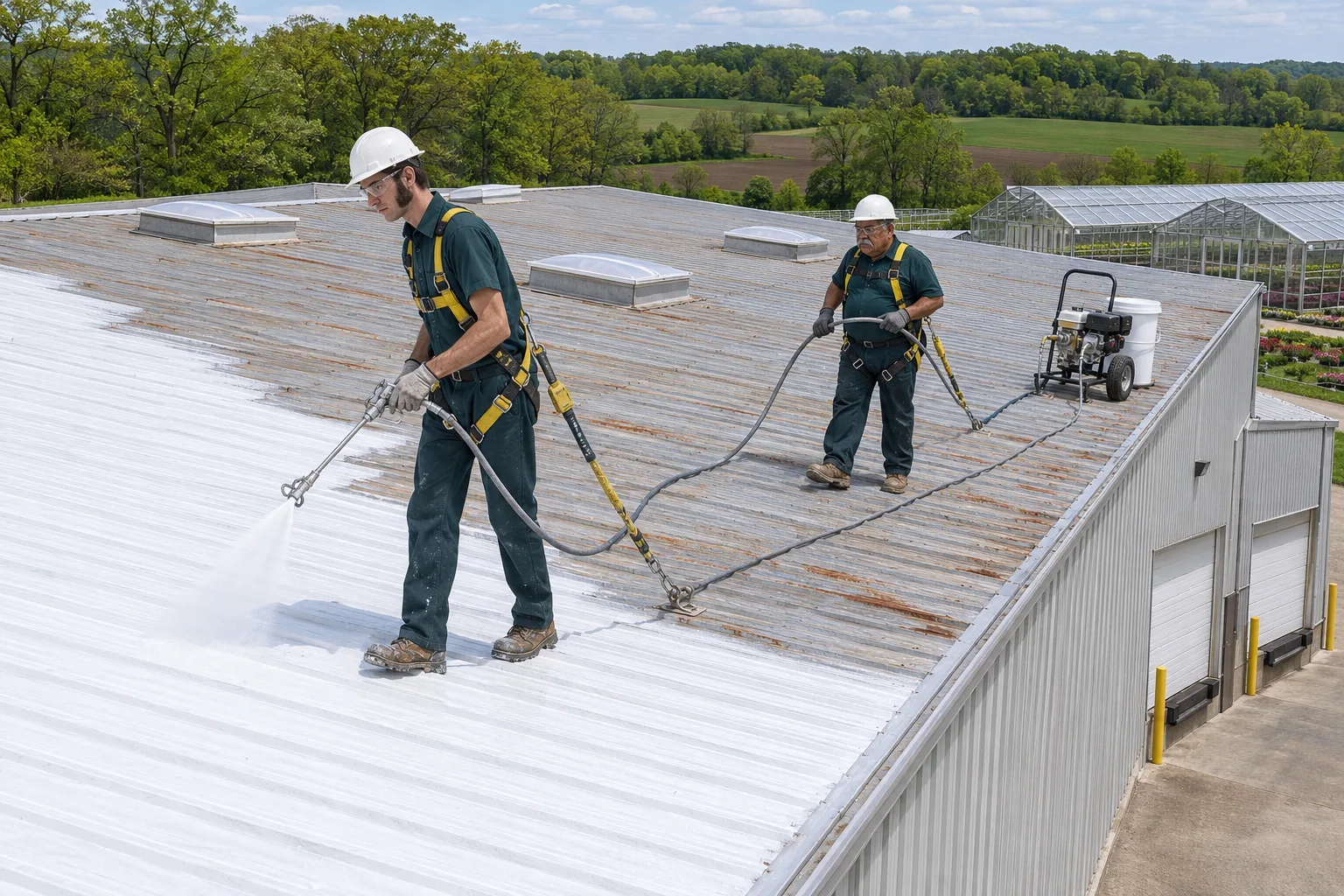
Connersville metal roof coating on a working plant is planned roof section by roof section. We map which bays sit over production, which over storage, and where exhaust fans vent heat or oil onto the panels.
Sections over quiet areas go first. Areas around fans and process vents get cleaned of residue and coated with a system that tolerates that exposure, on days your team picks.
What we find most on industrial metal roofs, ranked by how soon each needs work.
Oily or dusty buildup near fans breaks down paint and has to be cleaned before primer. Degreasing comes before primer.
Vibration and heat cycles back screws out, and drips land on equipment below. Upsized screws hold in fresh steel.
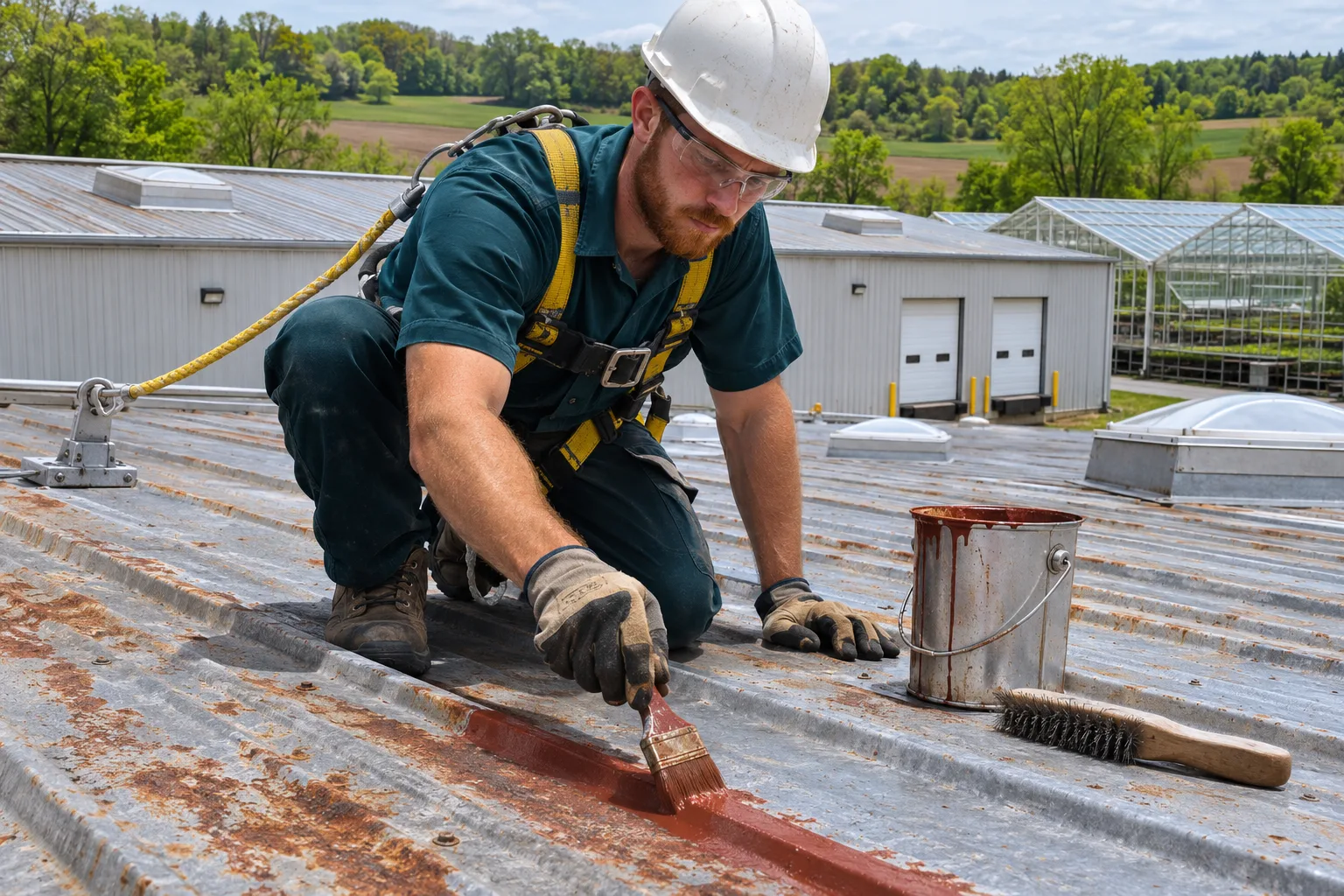
Steel curbs and the panels around them rust where water pools against the curb. Curbs get fabric and extra coating.
An active leak over a line gets traced and patched right away. We trace it before the next shift.
Wind and heat loosen vent flashing, which gets refastened and sealed before coating.
A coated plant roof keeps water off equipment and stock. These gains assume the prep is complete.
Coating one roof section at a time leaves the rest of the plant open, with crews staying clear of your loading lanes. The map is set with your team.
Fabric and extra coating at every curb and fan base close the openings where plant roofs leak most. Those spots get two passes.
Small shops and large plants get the same prep: washed panels, treated rust, sealed screws and laps. The scope is sized to the roof.
Sealing every lap and fastener at once replaces the cycle of chasing one drip after another. Your maintenance staff gets fewer roof calls.
Each system we apply in Connersville, where it fits on plant and shop roofs, and the first inspection check.
| System | Where It Fits | Check First |
|---|---|---|
| Commercial Metal Roof Coating | Exposed-fastener and standing-seam steel on plants, shops, and warehouses | Rust depth at laps, gutters, and panel ends |
| Silicone Roof Coating | Low spots and flat sections that hold water after rain | Wet insulation under ponding areas |
| Acrylic Roof Coating | Sloped metal that drains quickly and gets full sun | Spring and fall temperature limits for curing |
| Spray Foam Roofing | Worn metal or low-slope roofs that also need insulation | Panel dryness and covers for rooftop air intakes |
| Shingle Roof Coating | Intact asphalt shingles on offices, churches, and clinics | Curling, missing granules, or soft deck |
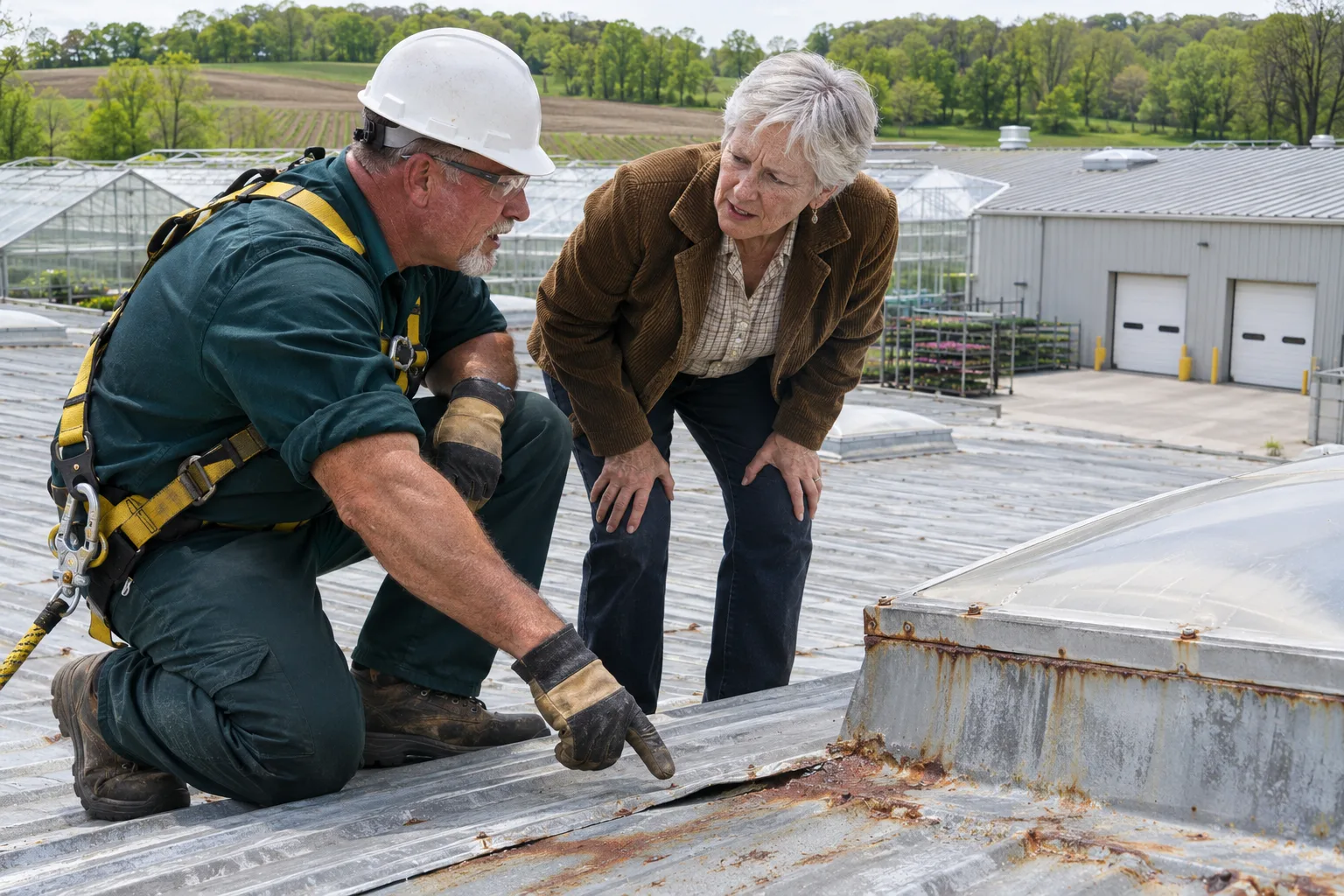
Leaks over a production line cost more than the roof repair. We trace the source and plan the coating around your shifts. Coating then runs on the days your plant can spare.
Call UsFour steps, each scheduled with your plant contact.
We walk every bay, note fans and curbs, probe rust at laps, and check the floor below for drip marks. Drip marks often point to the leak. Rooftop units and fans are listed by section.
Your team picks the order of roof sections and the days around production and deliveries. Quiet sections are coated first. Holiday and maintenance shutdowns make good coating days.
Panels are washed, residue removed near fans, rust ground and primed, and screws and laps sealed. Fans are checked for residue again. Primer cures before the topcoat goes on.
Coating goes on to the specified thickness and each section is walked before the crew moves on. You see each finished section before the next. The written scope is updated as sections finish.
Shops, plants, and storage buildings in these towns get the same work. Elsewhere? Please call us or send us a message.
Farm shops and ag buildings with loose exposed screws. We inspect each roof first and send a written scope.
Warehouse roofs coated in phases around shipping. We inspect each roof first and send a written scope.
Older steel buildings with rust holes and ceiling stains. We inspect each roof first and send a written scope.
Storage buildings with eave gutters that need their own repair. We inspect each roof first and send a written scope.
Answers for Connersville plant and building owners.
Yes. Industrial and commercial metal roofs in Connersville get the same inspection of rust, screws, seams, and drainage.
After that, crews clean, treat, and seal the problem areas and apply the coating that fits the slope and drainage of each roof.
Ask about your roof: (260) 517-5834Our published range is about $2.50 to $4.00 per square foot for coating. Rust repair, the number of curbs and fans, residue cleanup, and access move a plant roof within it. Fans and curbs add detail work.
Yes. We take small shop and storage roofs in Connersville as well as plants, with the same inspection and written scope. Distance does not change the published range.
Yes, after the residue is cleaned off. We pick a coating that tolerates that exposure and add extra detail at the fan curb. Ventilation upkeep on the fan helps the coating last.
It depends on size, rust, and weather. We give you the section map with dates before work starts. Weather days are built into the plan.
Yes, with the work planned around those areas. Crews pick low-odor products where the scope calls for them, cover openings, and keep work over sensitive spaces to times your team approves.
Most can. Intakes near spraying get covered, and units over the section being sprayed are shut down briefly with your maintenance team.
Loose rust and old sealant are collected on the roof as crews work, and openings over equipment are covered. Cleanup happens at the end of each day so nothing falls through later.
Tell us which bays leak and when production runs. We will inspect the roof and plan the coating by section.