Silicone Coating
- Ponding Water
- Holds up under standing water
- Coats Needed
- Often one or two at full thickness
- Recoat Later
- Recoated with silicone
- Dirt Pickup
- Holds more dirt, cleaned at recoat
- Published Range
- About $2.50 to $4.00 per sq ft

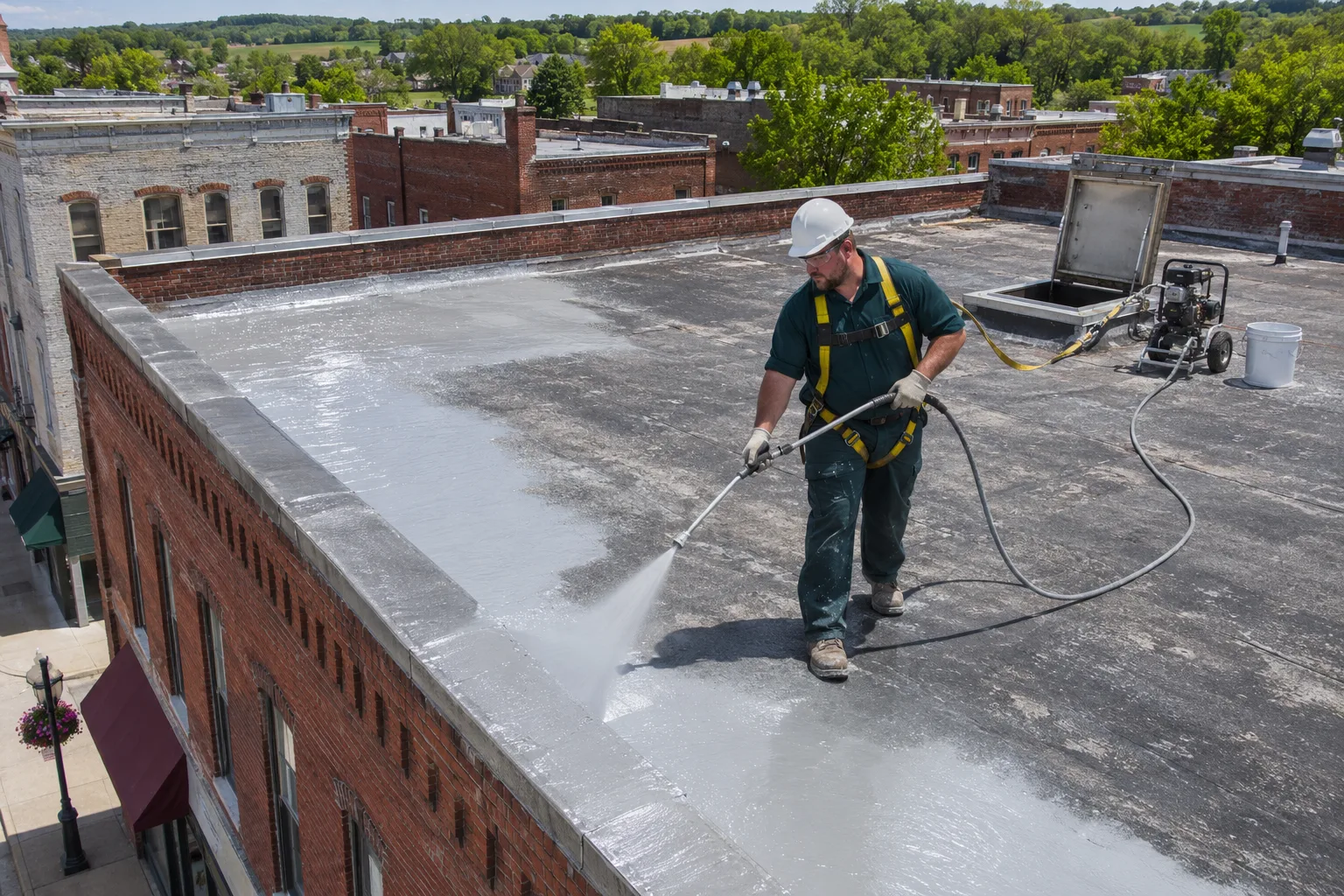
As a Richmond silicone roof coating contractor, we spray silicone over metal and low-slope roofs where water sits after storms, after the prep is done.
Richmond silicone roof coating suits roofs that hold water. Here is how it compares with acrylic and with tearing off.
Signs that point toward silicone, and what has to be fixed before it goes on.
Puddles near drains and curbs break down most coatings; silicone is the system we use there. We mark each one on the roof plan.
A spongy feel near ponding areas points to wet insulation that gets cut out before coating. Moisture readings confirm the spot.
Debris at strainers keeps water on the roof longer and has to be cleared first. Strainers go back on before coating.
Growing stains mean water is moving now and should be traced right away. A leak search comes before any quote.
Loose layers from a past job come off so the silicone bonds to a firm surface. Scraped edges get feathered smooth.
How silicone sits next to the other systems we apply in Richmond, with the first check for each.
| System | Where It Fits | Check First |
|---|---|---|
| Commercial Metal Roof Coating | Metal panels with screws and laps that can be resealed | Screw count and stripped holes |
| Silicone Roof Coating | Roofs with ponding near drains and between curbs | Old coatings that silicone has to bond to |
| Acrylic Roof Coating | Well-drained metal roofs coated in warm, dry weather | Rain in the forecast during the cure window |
| Spray Foam Roofing | Roofs where added R-value is part of the goal | Rusted-through sheets that need swapping first |
| Shingle Roof Coating | Shingle sections that still lie flat | Flashing at walls, vents, and skylights |
Silicone adds the most where water lingers. These benefits assume the wet areas underneath are fixed first.
Silicone resists ponding water, so low spots near drains and curbs stay sealed where other coatings soften.
High-solids silicone builds the specified film in one or two coats, which shortens time on the roof.
Ultraviolet light does little to silicone, so the membrane keeps stretching with the metal or deck below.
At the end of its service, the surface is washed and new silicone goes over the old without stripping.

Ponding areas are where silicone pays off. We check the insulation under them before any coat goes on.
Get A Free EstimateSilicone needs a clean, dry, firm surface. Four steps get it there and one puts it on.
We map ponding areas, probe for wet insulation, and check seams, curbs, and drains before choosing a thickness. Thickness is set for the worst ponding spot.
Pressure washing removes dirt and chalk, and the roof dries fully, since silicone will not bond to damp areas. A moisture check confirms dry areas.
Wet sections are cut out and replaced, seams are reinforced, and primer goes on wherever bleed-through or rust is a risk. New insulation matches the old thickness.
Curbs, pipes, and drains get extra silicone and fabric so the field coat ties into every opening. Drains get a reinforced collar.
Silicone is sprayed in one or two passes with wet film checks across the field and at low spots. Extra material goes into low areas.
A building can carry more than one system when its roof sections differ.

Steel sections with loose screws get full fastener and lap prep before any topcoat.
Commercial Metal Roof Coating in Richmond
Pitched metal that drains well can take acrylic, which stays cleaner in sun.
Acrylic Roof Coating in Richmond
Foam adds insulation and can build up low areas before a silicone topcoat.
Spray Foam Roofing in RichmondDirect answers about silicone on Richmond commercial roofs.
Silicone sits in our published coating range of about $2.50 to $4.00 per square foot, against about $5 to $8 for replacement.
Thickness, seam and fastener prep, wet areas that need replacing, and roof access set where your roof lands in that range.
Ask about your roof: (260) 517-5834It collects dirt, which dulls reflectivity, and it gets slick when wet. Other coatings rarely bond to it, so later recoats stay silicone. It also costs more per gallon than acrylic. On roofs that pond, its water resistance outweighs those points.
The specified dry film thickness decides it. Many systems reach it in one or two coats, with extra at seams and fasteners. Ribbed or weathered panels take more material to reach the same thickness, which we check wet as we spray.
Silicone systems are often rated for 10 to 20 years, with thickness, prep, drainage, and roof traffic setting where yours lands. Cleaning and recoating with silicone extends service, and hail or traffic damage should be patched soon after it happens.
Yes. Their metal roofs coat well, but humid interiors can rust panels from underneath, so we check for condensation first. Silicone protects the outside face and leaves interior moisture to ventilation.
It can after the old coating is washed, loose areas are scraped, and a bond test passes. Some roofs need a primer between the two layers.
Silicone tolerates standing water; it does not change the slope. If water sits because a drain is clogged or the deck has sagged, that cause is fixed first, and silicone then covers the area so the remaining puddles do no harm.
Tell us where water sits on your roof and how big the building is. We will inspect the wet areas and price the silicone system.