What We Install
Spray Foam Roof
- Leaks
- Laps, screws, and seams covered in one layer
- Insulation
- Adds R-value with each inch
- Low Spots
- Foam can be built up to help drainage
- Upkeep
- Topcoat inspected and recoated on schedule
- Pricing
- Set after inspection

As a Richmond spray foam roofing contractor, we spray foam over repaired metal and low-slope roofs, then seal it under a protective coating.
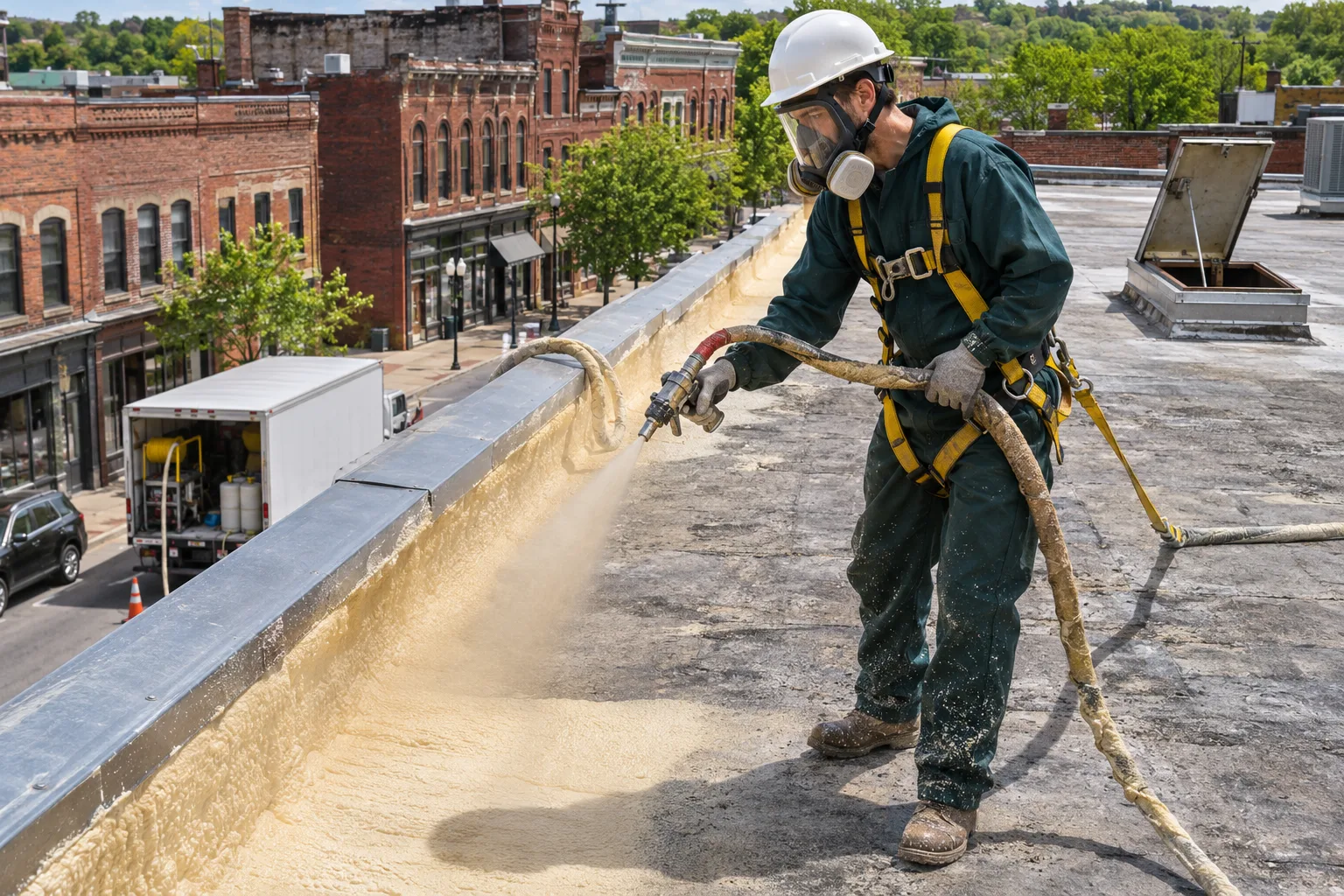
Richmond spray foam roofing does two jobs at once. This table shows when that is worth it over a coating or new panels.
Conditions that point to foam, and the ones we fix before the rig starts.
When water gets in along dozens of laps, one foam layer covers them all together. Foam bridges every lap in one pass.
Bare steel moves heat fast, and foam adds insulation right on top of the panels. Each inch of foam adds insulation value.
Holes in the steel are cut out and replaced first, since foam needs a solid base. New sheets match the old profile.
Wet material is found and removed so foam goes over a dry roof. Moisture readings confirm the area is dry.
Active leaks get traced and patched right away so damage stops spreading inside. Temporary patches hold until foam goes on.
Foam beside the other systems we apply in Richmond, with the first check for each.
| System | Where It Fits | Check First |
|---|---|---|
| Commercial Metal Roof Coating | Steel roofs whose factory finish has chalked or rusted | Panels thinned or holed by rust |
| Silicone Roof Coating | Roofs that pond and need a thick single system | Dirt pickup on light topcoats near exhaust fans |
| Acrylic Roof Coating | Pitched metal where reflectivity matters most | Low areas that would hold water on the coat |
| Spray Foam Roofing | Metal or low-slope roofs that leak at many seams at once | Overspray control near parked cars and units |
| Shingle Roof Coating | Commercial shingle roofs with years of service left | Shingle maker guidance and code review |
Foam roofs gain the most on metal buildings that leak in many places and lose heat through bare steel.
Sprayed foam bridges laps, screw heads, and seams together, so the roof surface becomes one piece.
Closed-cell foam on top of the panels slows heat loss in winter and heat gain in summer.
Extra foam where water sits can improve drainage before the topcoat seals the surface.
Foam adds little load compared with a second metal roof or a built-up system.

Many leaks at once is when foam makes sense. We check the steel and dryness, then price the foam and topcoat.
Get A Free EstimateFoam goes down fast; the prep and the topcoat take the planning.
We check panel condition, find wet insulation, note rooftop units and intakes, and measure where water sits. Findings set the foam thickness.
Rusted-through sheets, loose flashing, and failed curbs are fixed so the foam sits on a solid surface. Loose fasteners are tightened too.
Air intakes, parked cars, and walls get covers, and work is planned around wind direction. Spraying pauses when wind shifts toward them.
Foam goes on in lifts to the planned thickness, which is probed across the field as it rises. Thicker lifts go where water used to sit.
A protective topcoat covers all foam soon after it is sprayed, and we walk the roof with you. Foam is never left exposed to sun for long.
Some roofs need a coating alone, and every foam roof needs one on top.
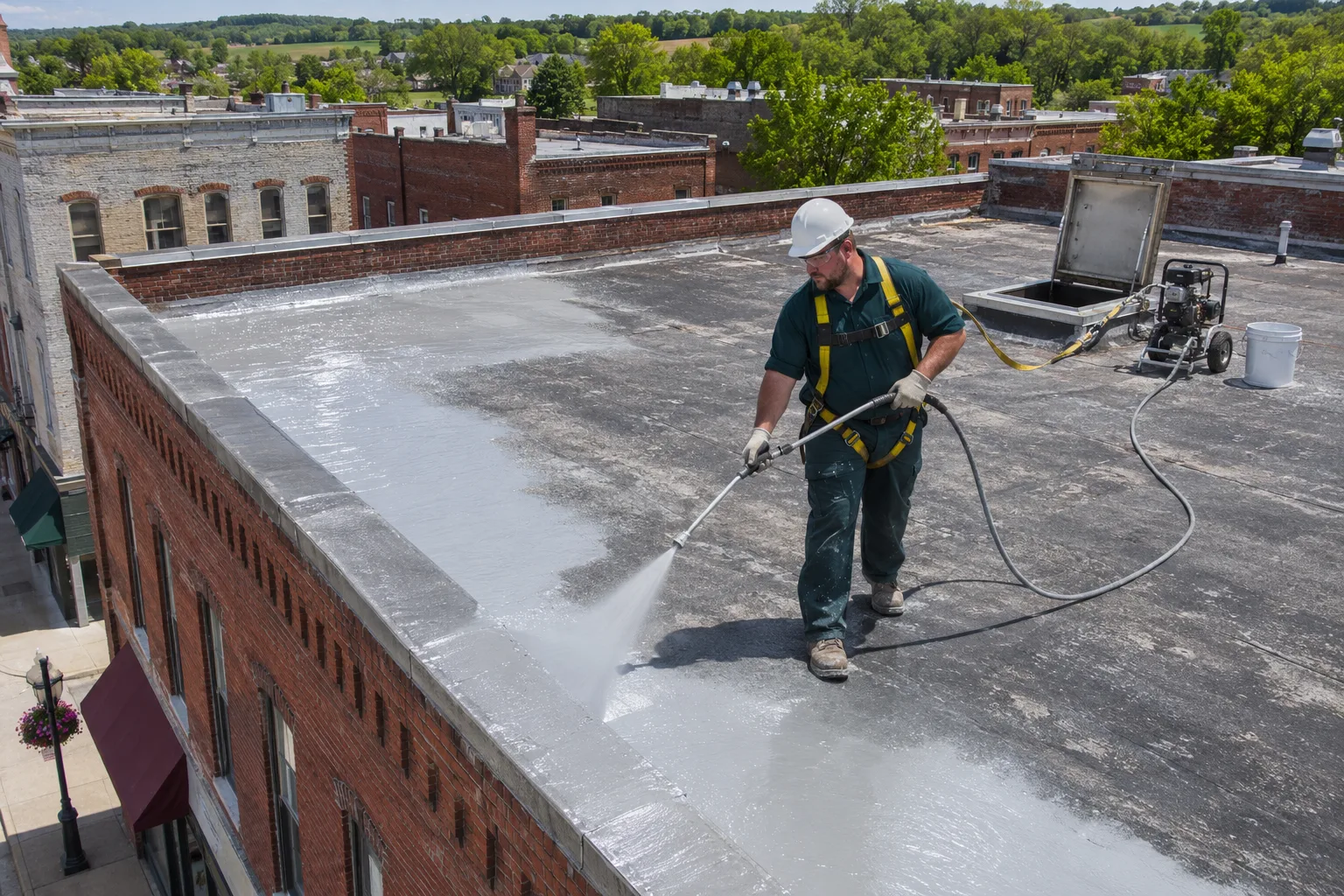
Silicone often tops a foam roof and handles any spot where water still sits.
Silicone Roof Coating in Richmond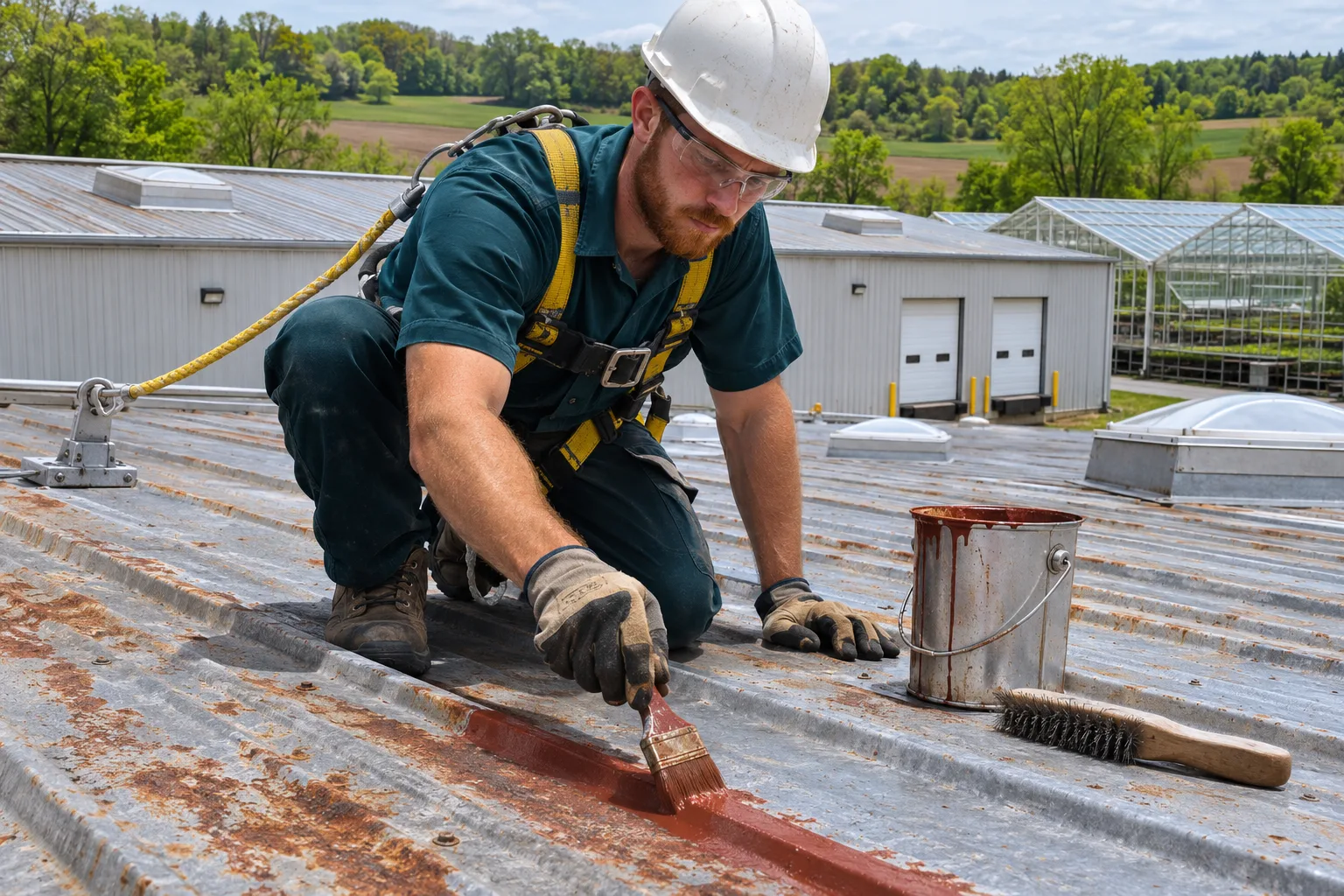
Steel that only leaks at screws and laps can be restored with a coating alone.
Commercial Metal Roof Coating in Richmond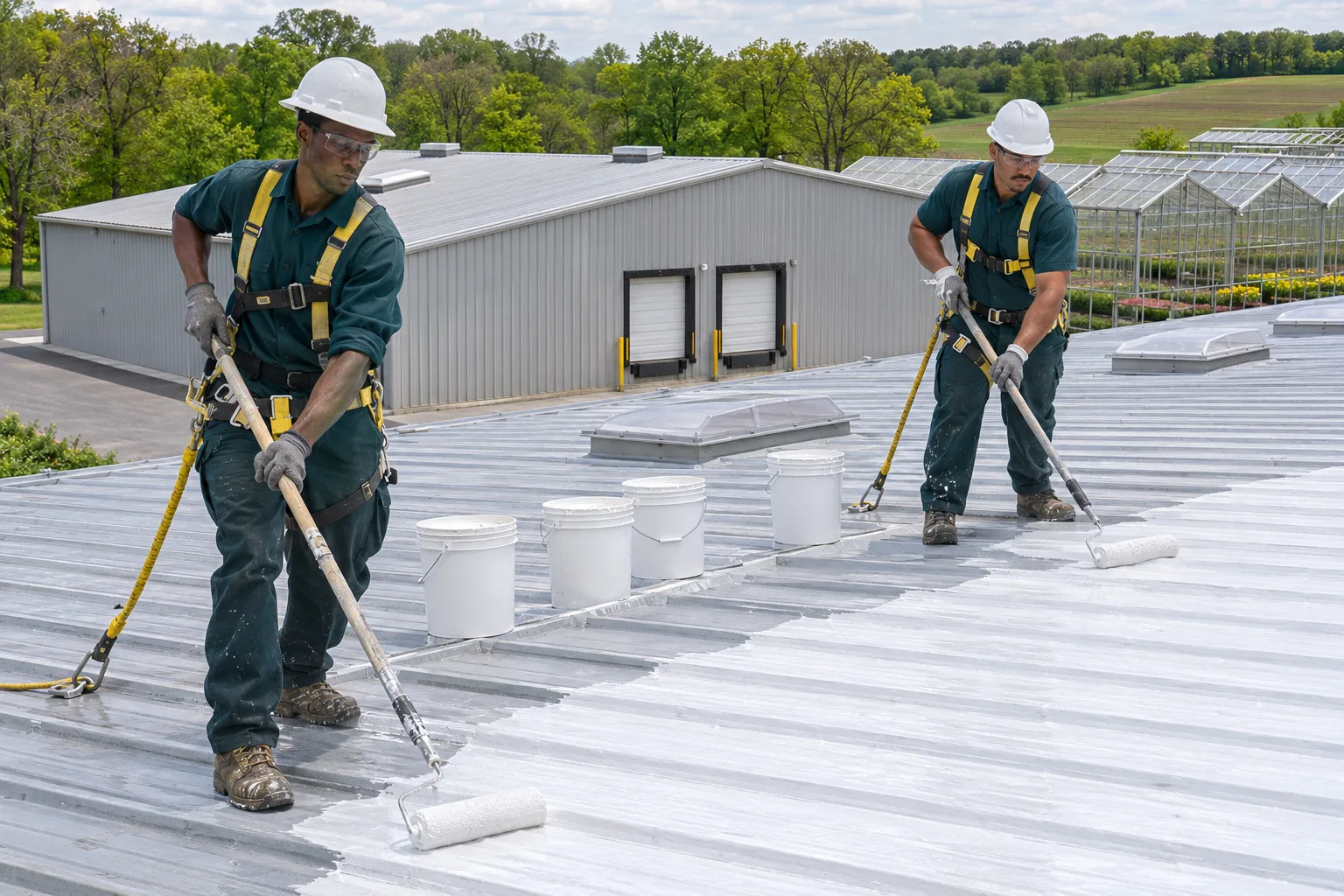
Acrylic topcoats are used on foam that drains well and gets full sun.
Acrylic Roof Coating in RichmondAnswers on foam roofs for Richmond plants, shops, and warehouses.
Foam is priced after we inspect the roof. For reference, our published range is about $2.50 to $4.00 per square foot for coating systems and about $5 to $8 for replacement.
Foam thickness, rust repair, panel prep, and rooftop equipment are what move a foam price.
Ask about your roof: (260) 517-5834Usually, yes. One continuous layer covers seams, laps, and screws, which stops most leaks from those points. Rusted-through panels, failed curbs, and loose flashing are fixed first. Condensation inside the building is a separate problem that foam leaves alone.
As long as its topcoat is kept up. With inspections and recoats on schedule, foam roofs are often kept in service for 20 years or more. Hail marks, traffic damage, and exposed foam should be repaired quickly.
Recoat when the topcoat wears thin, chalks, cracks, or lets foam show through. We look for blisters, hail marks, and scuffs from foot traffic, then clean and recoat before sun reaches the foam.
Yes, after the panels are cleaned, rust-treated, and dry, and any holed sheets are replaced. Foam then fills the ribs and covers the screws.
Intakes are covered, nearby cars are moved or covered, and spraying stops when wind blows toward people or property.
Thickness depends on the insulation goal and the drainage needed, with extra foam built up in low areas. We probe the foam as it rises so the finished depth matches the scope across the roof.
Keep foot traffic to walkway paths, clear drains, and look for hail marks after storms. Small punctures are patched with sealant and a topcoat before water reaches the foam.
Tell us how the building leaks and how it heats and cools. We will inspect the roof and price foam and topcoat in writing.