Old Steel Kept in Service
Coating over solid panels keeps an older roof working without the cost and mess of a tear-off. The building stays covered throughout.

As a Winchester metal roof coating contractor, we start older steel roofs with the signs owners can see, then confirm the prep list on the roof.
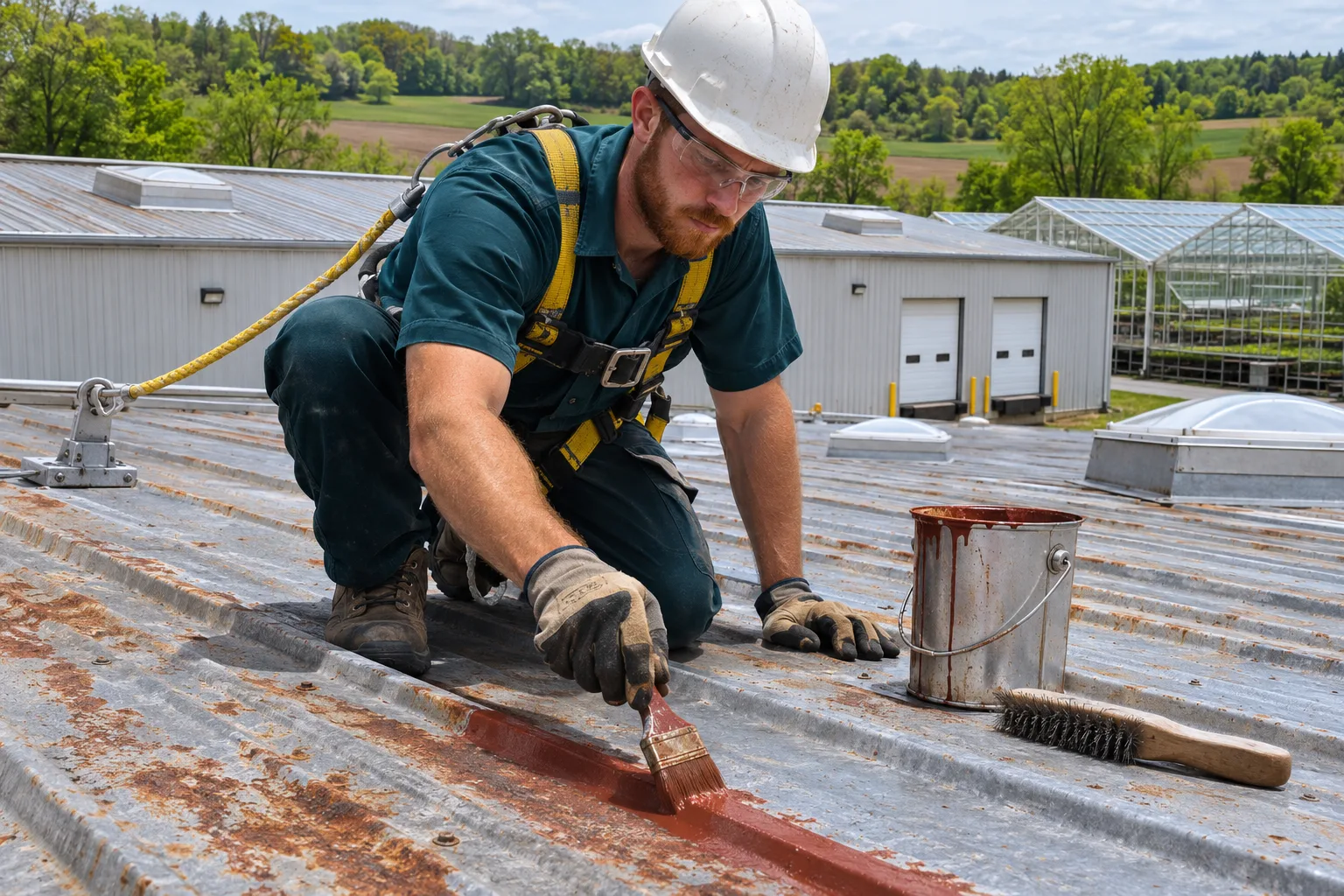
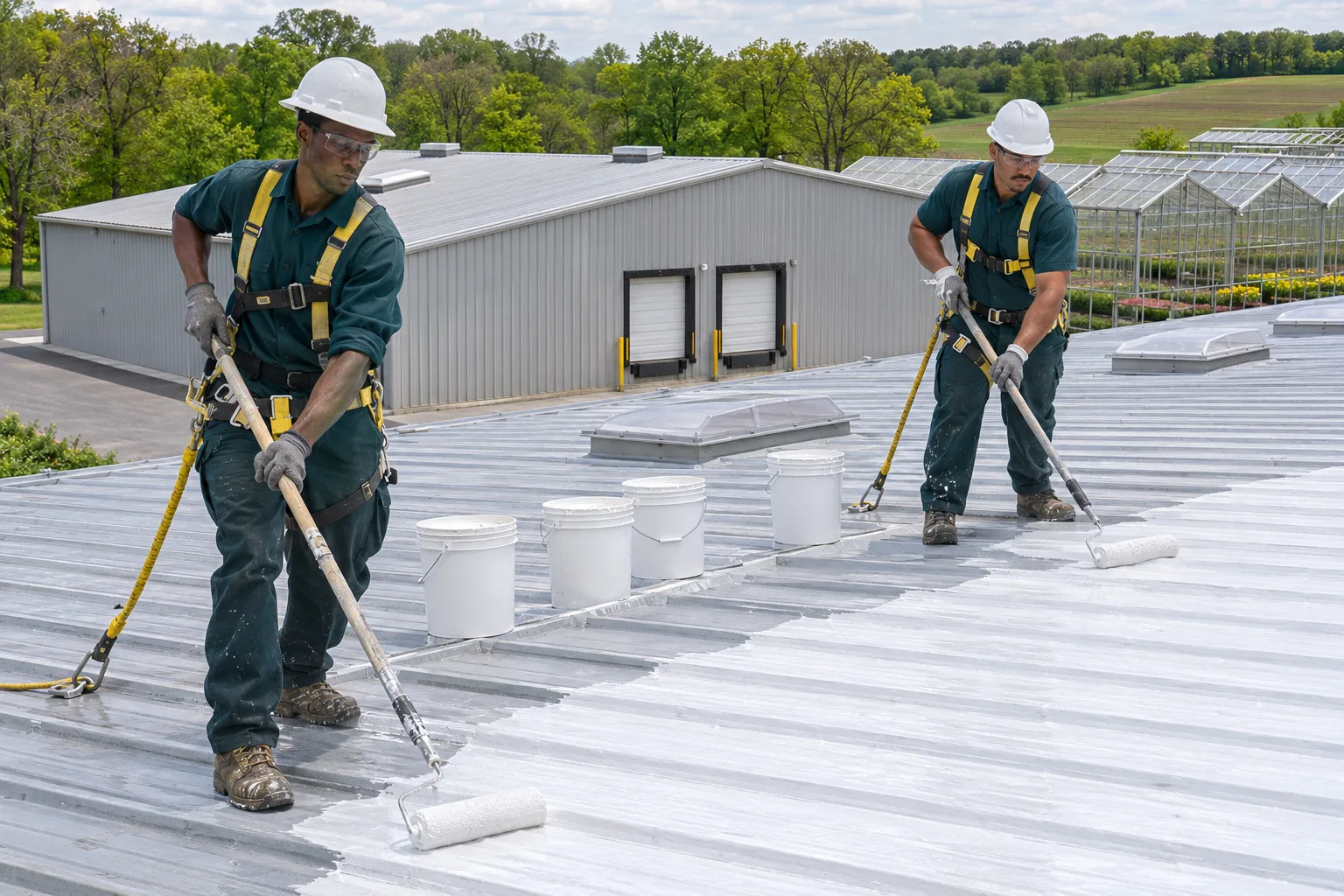
Winchester metal roof coating on an older building starts with what you can see from the floor and the eaves. Rust holes, missing screws, open laps, and stains on ceiling tile or insulation each tell us how much prep the roof needs.
Bring that list to the inspection. We confirm it on the roof, add what we find, and explain which repairs come before the coat.
The signs owners spot first, ranked by how soon each one needs attention.
Light through the steel means rust has gone through, and those sheets get replaced before coating. Spots of light on the floor show where.
Gaps in a screw line let wind lift the panel edge and push rain under it. New screws go in with fresh washers.
Fresh rings mean an active leak that should be traced now. Older rings dry out and stay light.
Chalking shows the paint is wearing thin, which is the best time to coat. Coating now saves more of the steel.
Old sealant shrinks on older roofs, so laps open and need fabric.
An older steel roof gets the most from coating when the bad sheets are swapped first.
Coating over solid panels keeps an older roof working without the cost and mess of a tear-off. The building stays covered throughout.
Storefronts and shop buildings alike get the same rust, screw, and lap prep before the coat. The scope lists each building.
Primer over ground steel at laps and eaves slows rust at the spots it begins on older roofs. Those spots get extra primer.
You see which sheets, screws, and laps get fixed, and why, before any coating goes on. Each line item has a reason beside it.
Every system we apply in Winchester, where each fits on older roofs, and the first thing we check.
| System | Where It Fits | Check First |
|---|---|---|
| Commercial Metal Roof Coating | Exposed-fastener and standing-seam steel on plants, shops, and warehouses | Rust depth at laps, gutters, and panel ends |
| Silicone Roof Coating | Low spots and flat sections that hold water after rain | Wet insulation under ponding areas |
| Acrylic Roof Coating | Sloped metal that drains quickly and gets full sun | Spring and fall temperature limits for curing |
| Spray Foam Roofing | Worn metal or low-slope roofs that also need insulation | Panel dryness and covers for rooftop air intakes |
| Shingle Roof Coating | Intact asphalt shingles on offices, churches, and clinics | Curling, missing granules, or soft deck |
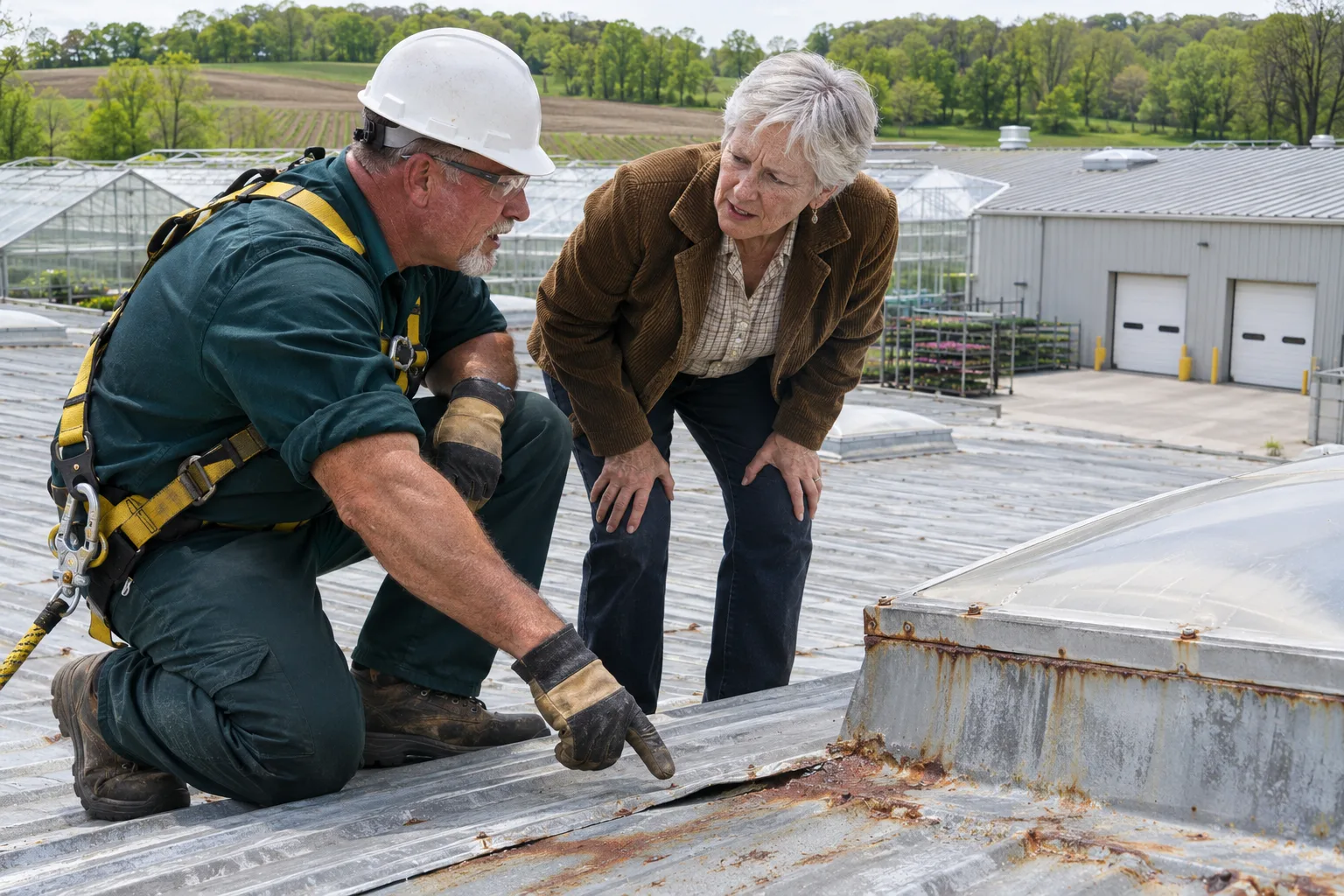
Pinholes of light mean rust has gone through. We replace those sheets and coat the solid panels around them. Old steel that still holds keeps its place on the roof.
Get A Free EstimateFour steps, starting with your own list of what you see.
We start with the signs you noted, then check every screw line, lap, and gutter from the roof. Your list goes into the written scope. Inside stains are matched to spots on the roof.
Panels with holes or thin steel are marked, and new sheets are ordered to match the profile. Matching sheets keep the roof even. Replacement sheets are listed in the scope.
New sheets go in, screws are replaced, laps sealed, and treated rust is primed. Primer cures before coating. Laps near new sheets get fabric too.
The coating system goes on to its planned thickness and the roof is walked with you. A final walk checks every repaired sheet. You get the system name and thickness for your records.
Buildings in these towns get the same coating work. Somewhere else? Please call us or send us a message.
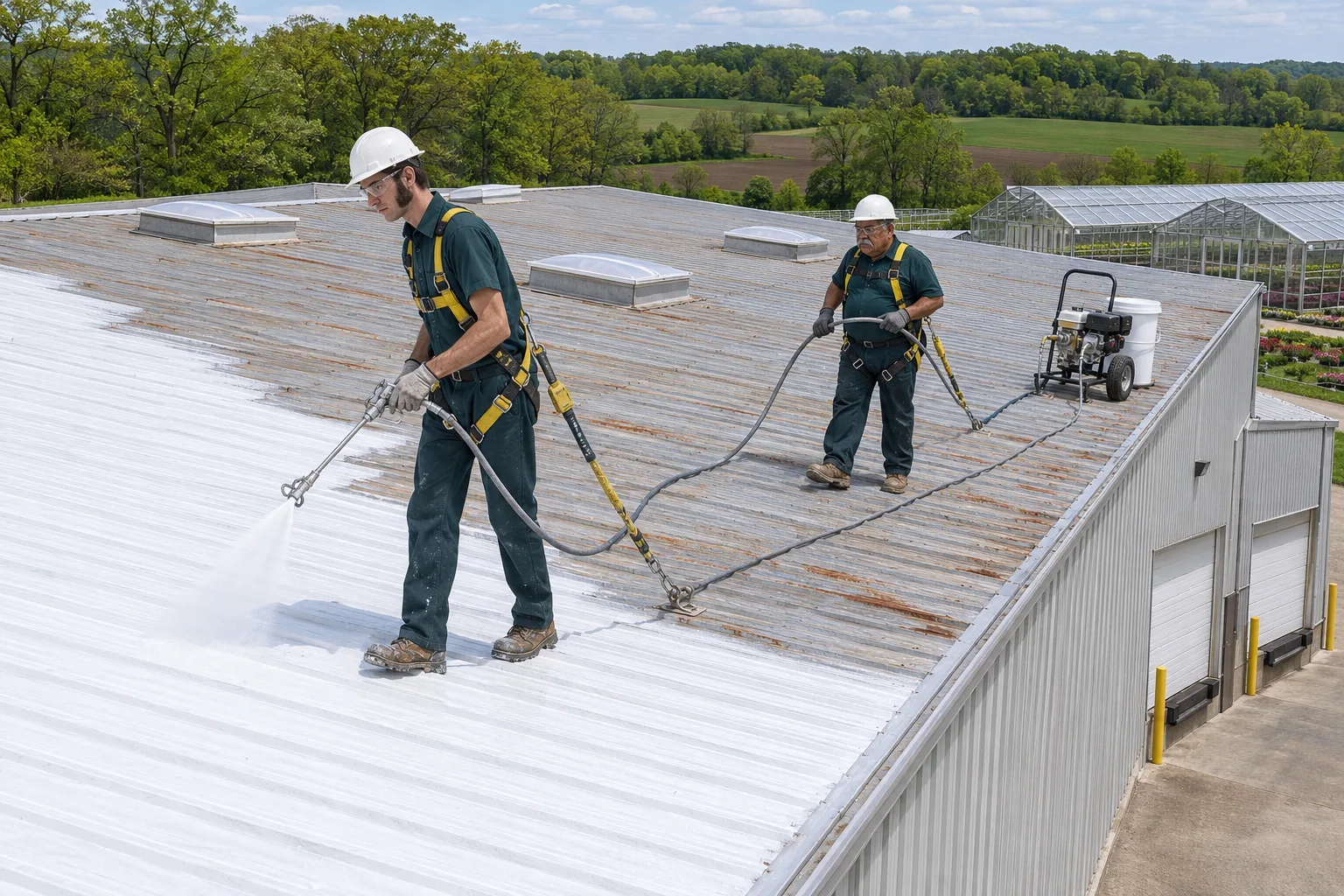
Plant and shop roofs coated by section. Each one starts with a roof walk and written scope.
Machine sheds where screws loosen across the roof. Each one starts with a roof walk and written scope.
Business roofs phased around daily shipping. Each one starts with a roof walk and written scope.
Storage and shop roofs with long eave gutters. Each one starts with a roof walk and written scope.
Answers for owners of older buildings in Winchester.
Look for rust holes, loose or missing screws, open laps, and stains on ceilings or insulation.
Those signs show how much prep the roof needs. We confirm the condition on the roof and explain which repairs come first and which coating fits.
Ask about your roof: (260) 517-5834We cover Winchester from Richmond. Call or send the address and we set a time to inspect. Distance does not change the published range.
Our published range is about $2.50 to $4.00 per square foot. The number of sheets to replace, screws, and lap work set where an older roof lands. Sheet count is the biggest variable.
When holed or thin sheets cover most of the roof, replacement makes more sense. Scattered bad sheets get swapped and the rest is coated. We show you the marked sheets.
In most cases. We measure the rib profile and order matching sheets before the work date. Odd profiles take longer to source.
Yes, once the loose paint is scraped, chalk is washed off, and a bond test passes. Old paint that holds firmly is a fine base for primer and coating.
If the roof sags, bounces, or holds water in the middle of bays, we flag it for a structural review before any coating is planned.
If most panels are solid and the frame is straight, coating keeps the roof working for years at a fraction of replacement. The inspection shows whether yours fits that picture.
Send your list of what you see on the roof and inside. We will inspect and tell you which repairs come first.