What We Install
Acrylic Coating
- Roof Slope
- Sloped metal that sheds water
- Weather Window
- Warm, dry days and mild nights
- Finish
- Bright and stays cleaner
- Recoat Later
- Acrylic over acrylic
- Published Range
- About $2.50 to $4.00 per sq ft
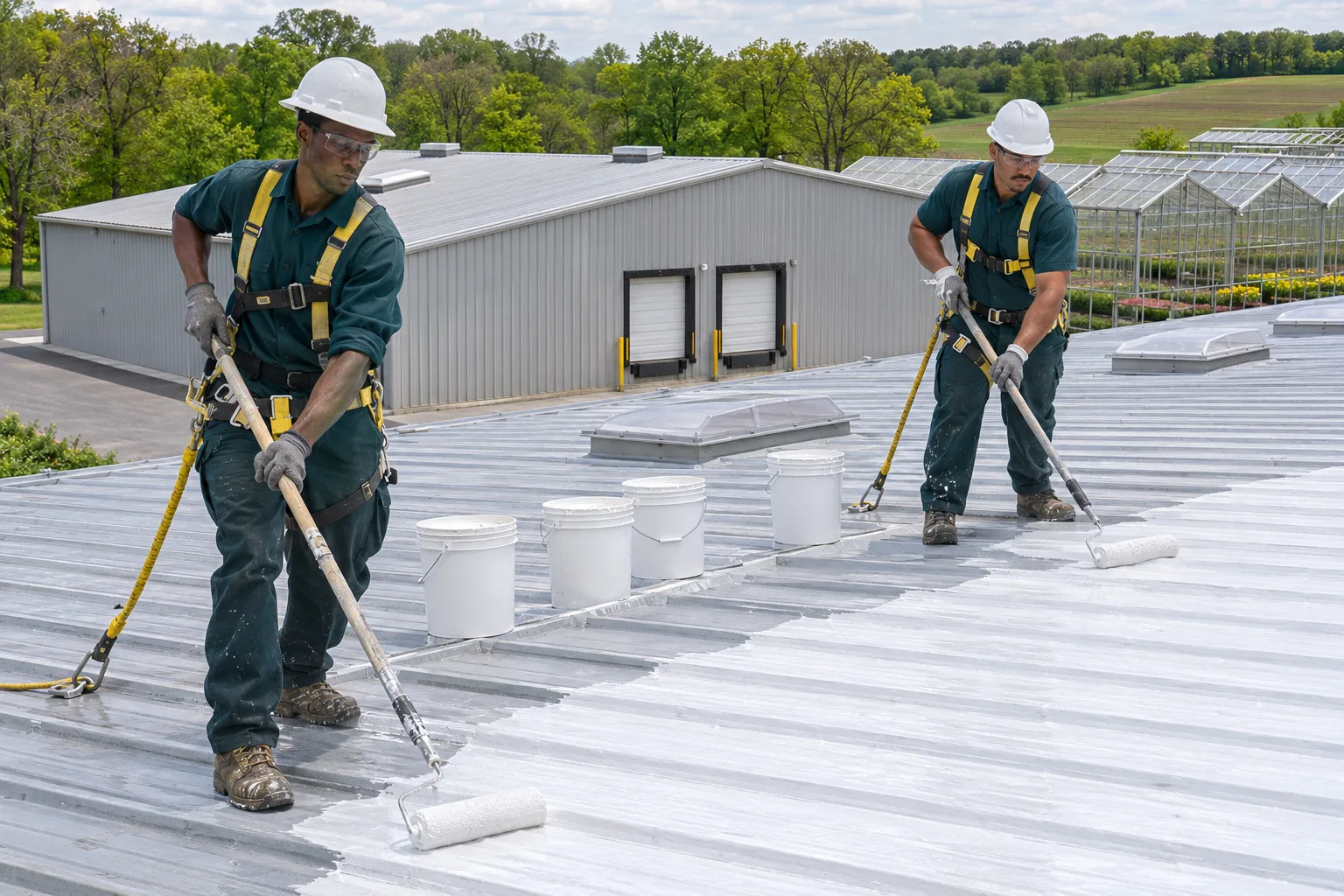
As a Richmond acrylic roof coating contractor, we roll and spray acrylic onto primed, well-drained metal roofs during the warm, dry stretch of the year.
Richmond acrylic roof coating works best on sloped steel. Here is how it lines up against silicone and a full tear-off.
What we look for before acrylic goes on a metal roof, ranked by urgency.
The factory finish is wearing off; washing removes chalk so acrylic grips the steel. Washing takes the chalk off first.
Rust is ground and primed first, since acrylic over live rust lets it keep spreading. Primer goes on bare steel only.
Acrylic softens under standing water, so those areas get silicone or a slope fix. The rest of the roof can still take acrylic.
Heads are cleaned and sealed, and stripped screws are upsized, before the field coat. Curb flashing is resealed before coating.
Skylight curbs leak often; an active drip gets traced and repaired right away. Fabric and sealant go around the curb.
Acrylic among the systems we apply in Richmond, with the first thing each one needs checked.
| System | Where It Fits | Check First |
|---|---|---|
| Commercial Metal Roof Coating | Steel roofs whose factory finish has chalked or rusted | Panels thinned or holed by rust |
| Silicone Roof Coating | Roofs that pond and need a thick single system | Dirt pickup on light topcoats near exhaust fans |
| Acrylic Roof Coating | Pitched metal where reflectivity matters most | Low areas that would hold water on the coat |
| Spray Foam Roofing | Metal or low-slope roofs that leak at many seams at once | Overspray control near parked cars and units |
| Shingle Roof Coating | Commercial shingle roofs with years of service left | Shingle maker guidance and code review |
Acrylic is a practical choice for steel that drains well. These are the gains once the panels are primed.
A primed panel gives acrylic a firm grip, so the film stays tight over ribs, laps, and screw heads.
White and light acrylic reflects summer sun off the panels and keeps the deck cooler on hot afternoons.
Acrylic stretches as steel expands in sun and shrinks at night, which keeps seams covered year-round.
Worn acrylic is washed and recoated with more acrylic, keeping later maintenance straightforward and affordable.
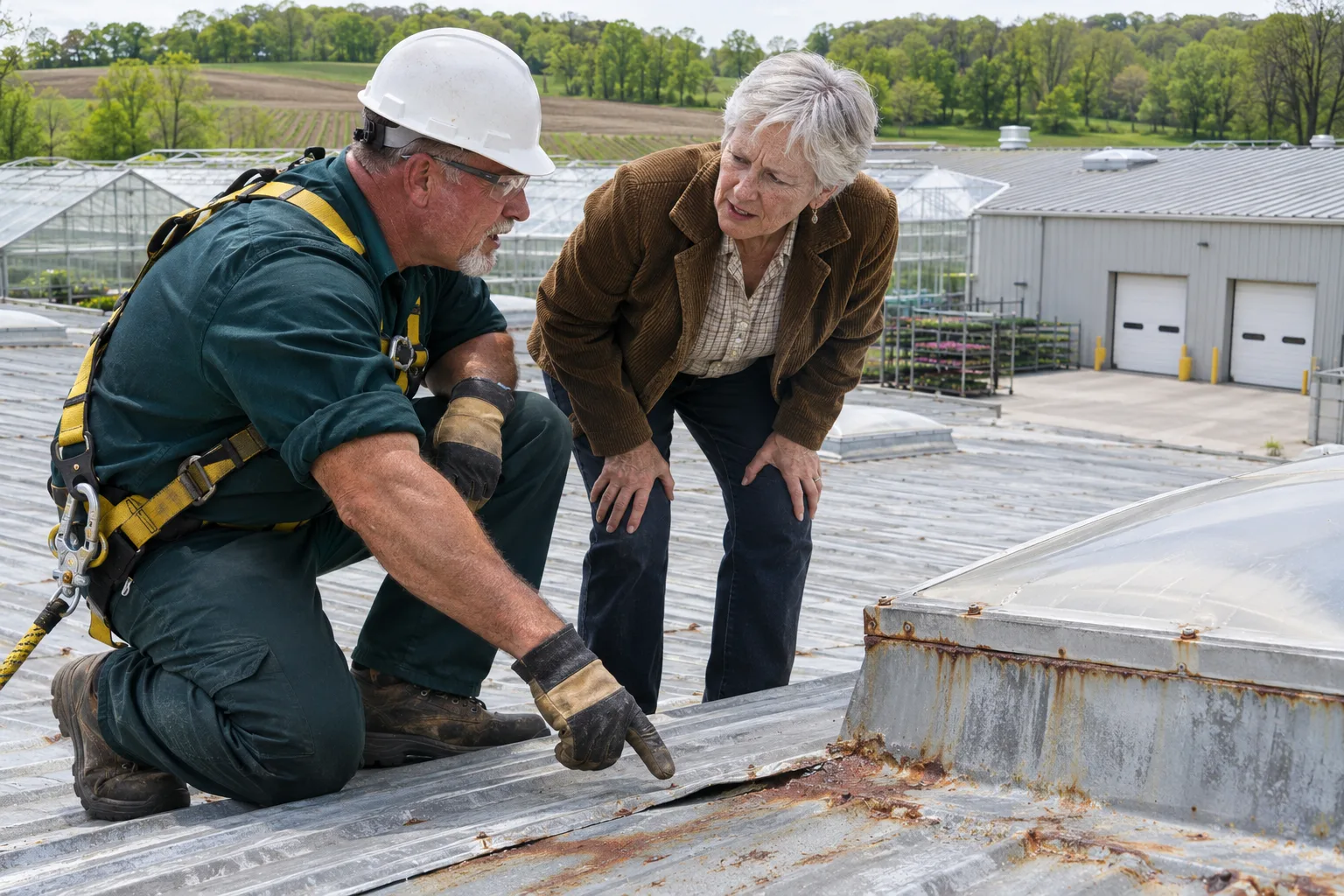
A worn factory finish is the right time for acrylic. We wash, prime, and coat before rust gets a start.
Get A Free EstimateAcrylic is water-based, so weather sets the schedule. Here is the order of work.
We check drainage, rust, screws, and laps, and flag any area that ponds so it gets a different system. Ponding areas are noted in the scope.
Chalk and dirt come off with pressure washing, and rust spots are ground and primed with an inhibitor. The roof dries fully before primer.
Fabric and sealant go into laps, curbs, and fasteners, which acrylic then covers in the field coat. Fabric goes in wherever panels meet.
Coating days are picked for warm temperatures, mild nights, and dry hours so the film cures fully. A coating day moves if rain is forecast.
A base coat and a topcoat are rolled or sprayed, with thickness checked on each pass. The topcoat goes on once the base has cured.
Parts of a roof that acrylic does not suit get one of these instead.
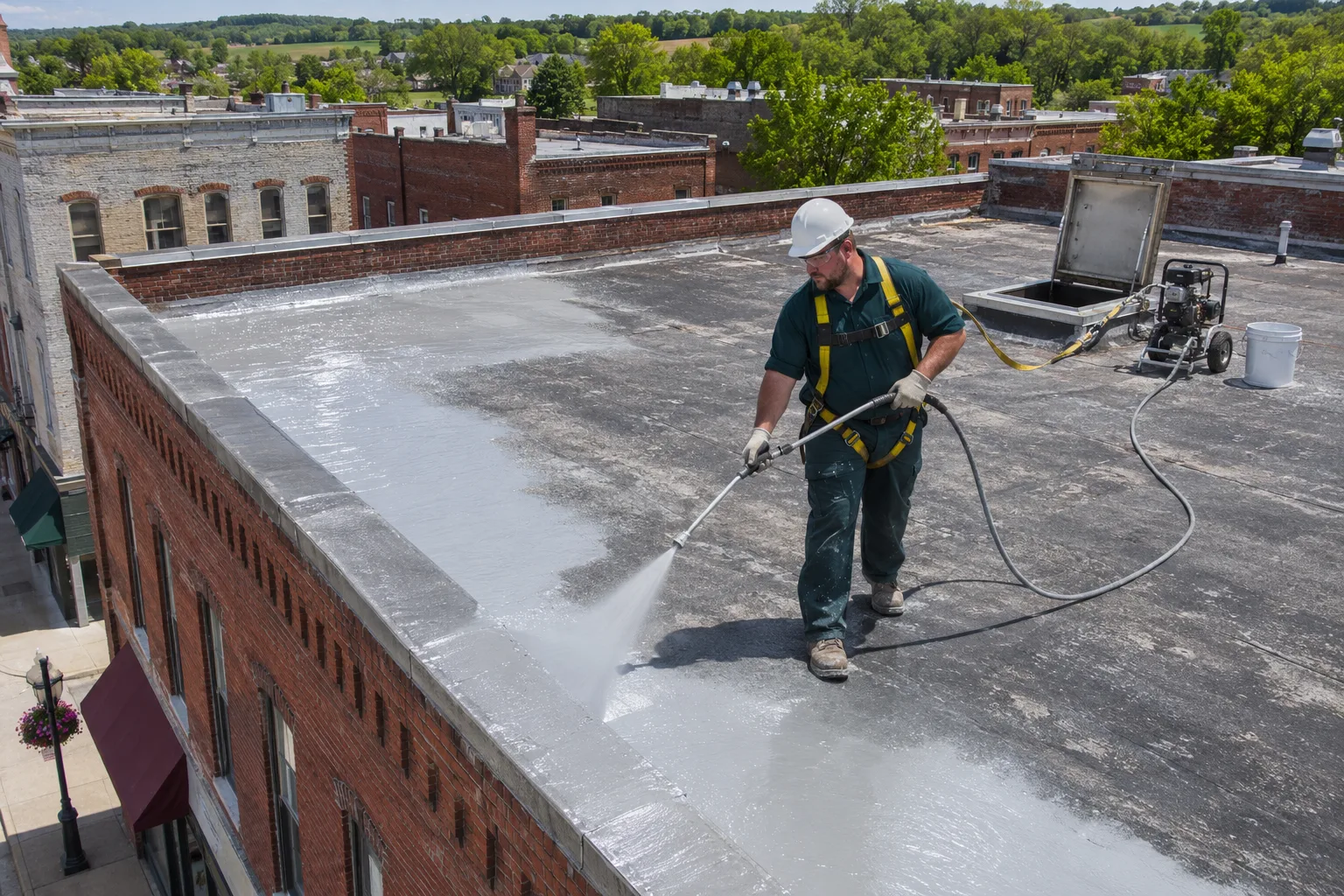
Flat sections that hold water take silicone, which tolerates ponding.
Silicone Roof Coating in Richmond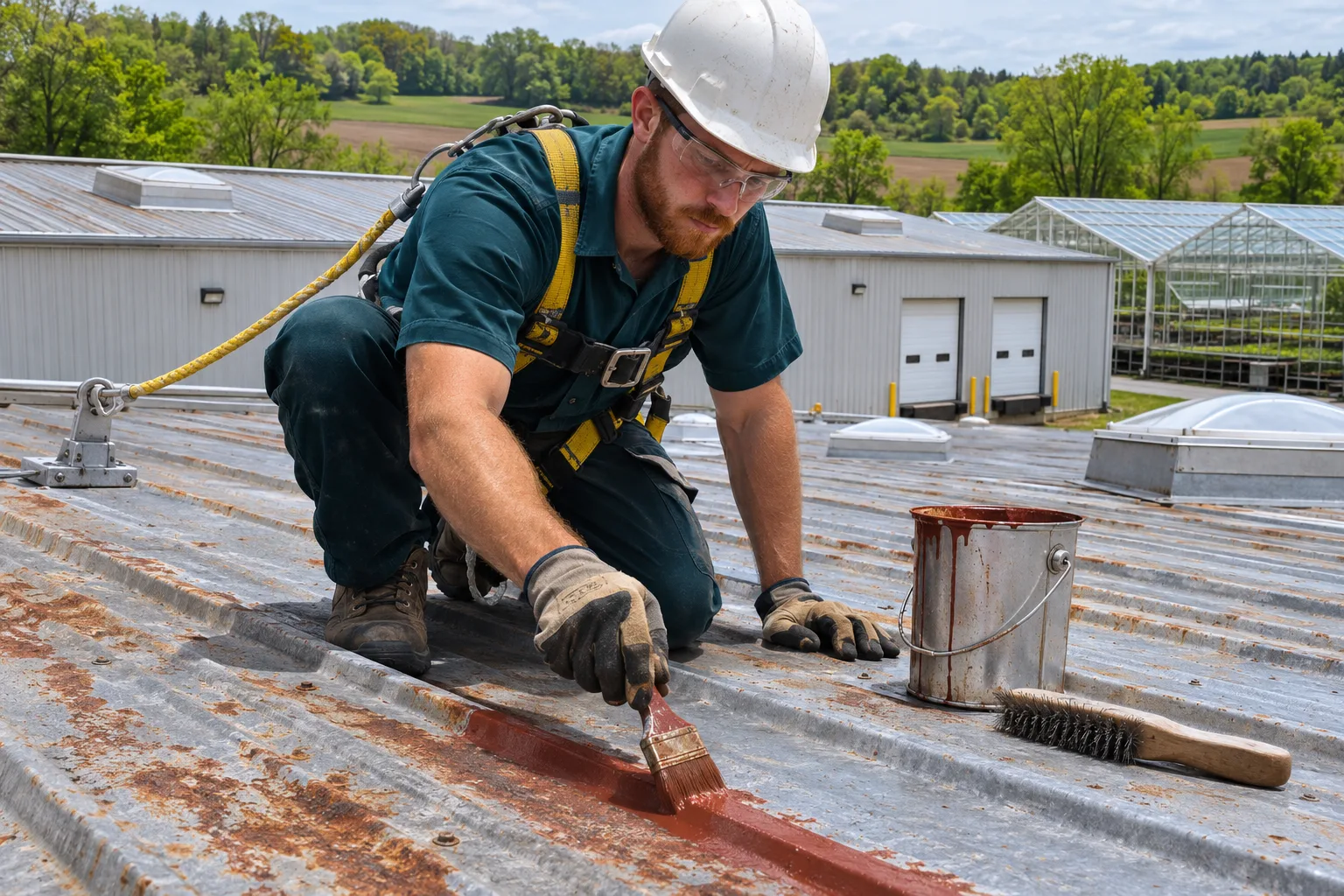
Heavy rust and many loose screws call for full metal restoration prep first.
Commercial Metal Roof Coating in Richmond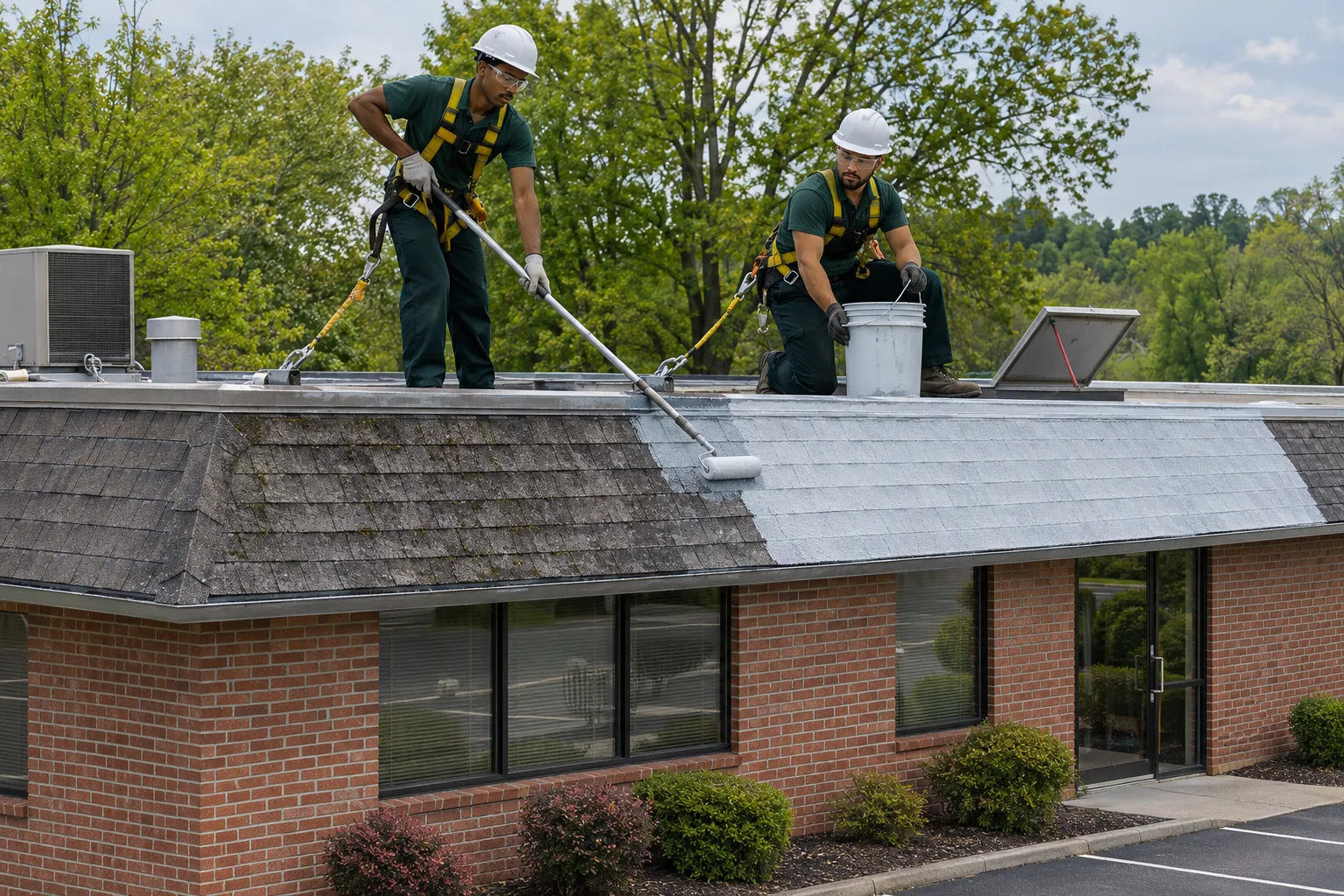
Shingled office wings or churches get a coating made for asphalt shingles.
Shingle Roof Coating in RichmondPlain answers on acrylic for Richmond building owners.
Acrylic falls in our published range of about $2.50 to $4.00 per square foot, with replacement at about $5 to $8 for comparison.
Surface prep, rust treatment, the number of coats, and access move your price within that range once we inspect.
Ask about your roof: (260) 517-5834Acrylic softens under standing water, needs warm, dry weather to cure, and can wash off if rain arrives too soon. It also takes more coats to build thickness. On sloped metal that drains, it remains a strong choice.
On a well-drained metal roof, acrylic is often expected to go around 10 years or more before a recoat. Film thickness, prep, sun, and freeze-thaw exposure set it, and ponding or heavy foot traffic shorten it.
It bonds to primed steel, reflects sunlight, and flexes with the panels. We apply it on warm, dry days and keep it off low areas that hold water, where silicone works better.
Late spring through early fall gives the warm days and mild nights acrylic needs. Each product sheet lists its own minimum temperature, and we schedule to it.
Only after the heads are cleaned, primed, and sealed. Stripped screws are upsized first so each one sits tight under the coat.
Usually no. Acrylic does not bond well to silicone, so a roof already coated in silicone gets more silicone. Old acrylic, bare primed steel, and many older paint finishes take acrylic well after cleaning.
White is the most common because it reflects the most sun. Light grays and tans are also available from most makers, and darker colors reflect less heat.
Send the roof size and slope, and we will check the panels and set a coating window for your building.