Screw Holes Closed for Good
Each head is sealed and coated over, so the hundreds of small openings on a shop roof stop dripping. The coat seals every head together.
As a Rushville metal roof coating contractor, we tighten and seal exposed screws and laps on shops and ag buildings, then coat the panels.
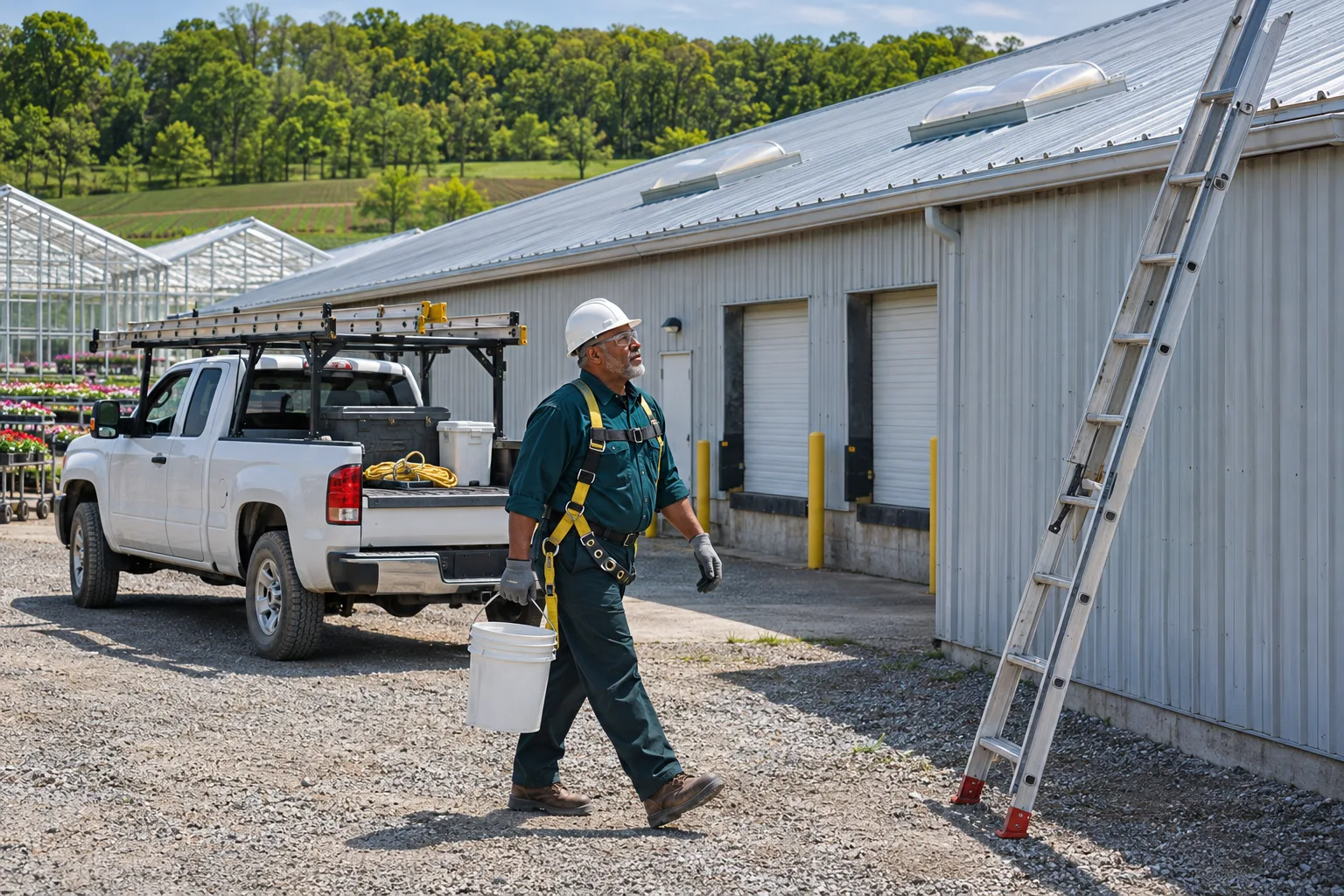
Rushville metal roof coating work often lands on shops, machine sheds, and ag buildings with exposed screws. Those screws loosen as the panels move, and the laps between sheets open a little more each winter.
Coating seals them once they are tightened or upsized. Drips that come from condensation under the panels are a different issue, and we point them out during the inspection.
Common conditions on Rushville shop and ag roofs, ranked by urgency.
Raised heads mean the washer no longer seals and rain gets in around the shank. New screws with fresh washers fix it.
Drips with no rain point to condensation, which needs ventilation rather than coating. A vent or insulation fix handles that.
Light showing between sheets means the lap has opened and needs sealing first. Fabric across the lap closes it.
Water reaching stored goods gets traced and patched right away. We trace it before stock gets ruined.
Orange streaks below screws mean the heads are rusting and need cleaning or replacement.
A coated shop roof keeps tools, stock, and equipment dry. These gains follow full screw and lap prep.
Each head is sealed and coated over, so the hundreds of small openings on a shop roof stop dripping. The coat seals every head together.
Shops, sheds, and small commercial buildings get one coating system across every roof section. Each section gets the same prep.
Coating keeps the existing sheets in service, so the building stays covered during the work. Tools and stock stay covered.
Treated and primed eaves stop rusting where meltwater sits in late winter. Primer goes on before the coat.
Each system we apply in Rushville, where it fits on shop and ag roofs, and the first check.
| System | Where It Fits | Check First |
|---|---|---|
| Commercial Metal Roof Coating | Metal panels with screws and laps that can be resealed | Screw count and stripped holes |
| Silicone Roof Coating | Roofs with ponding near drains and between curbs | Old coatings that silicone has to bond to |
| Acrylic Roof Coating | Well-drained metal roofs coated in warm, dry weather | Rain in the forecast during the cure window |
| Spray Foam Roofing | Roofs where added R-value is part of the goal | Rusted-through sheets that need swapping first |
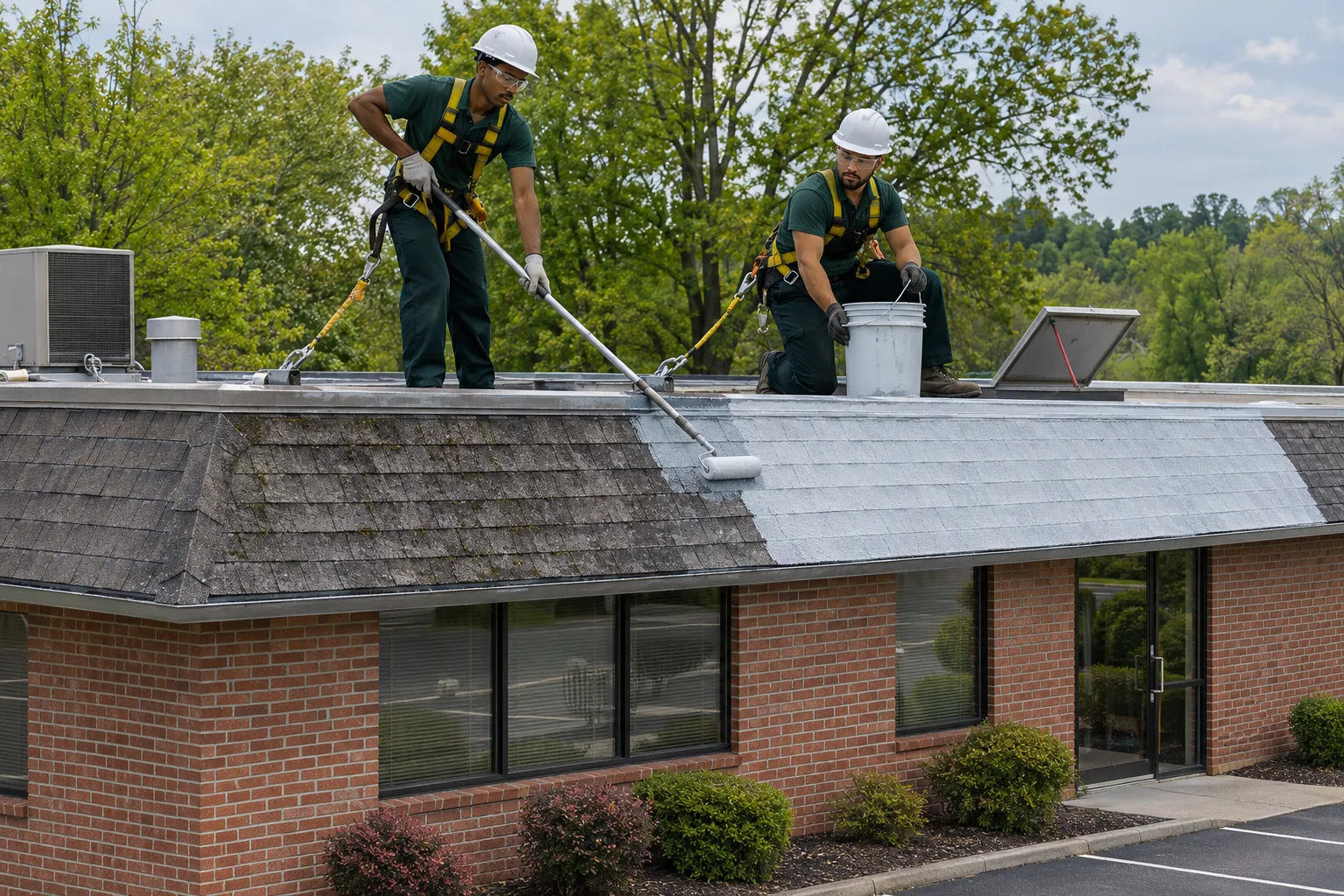
| Shingle Roof Coating | Shingle sections that still lie flat | Flashing at walls, vents, and skylights |
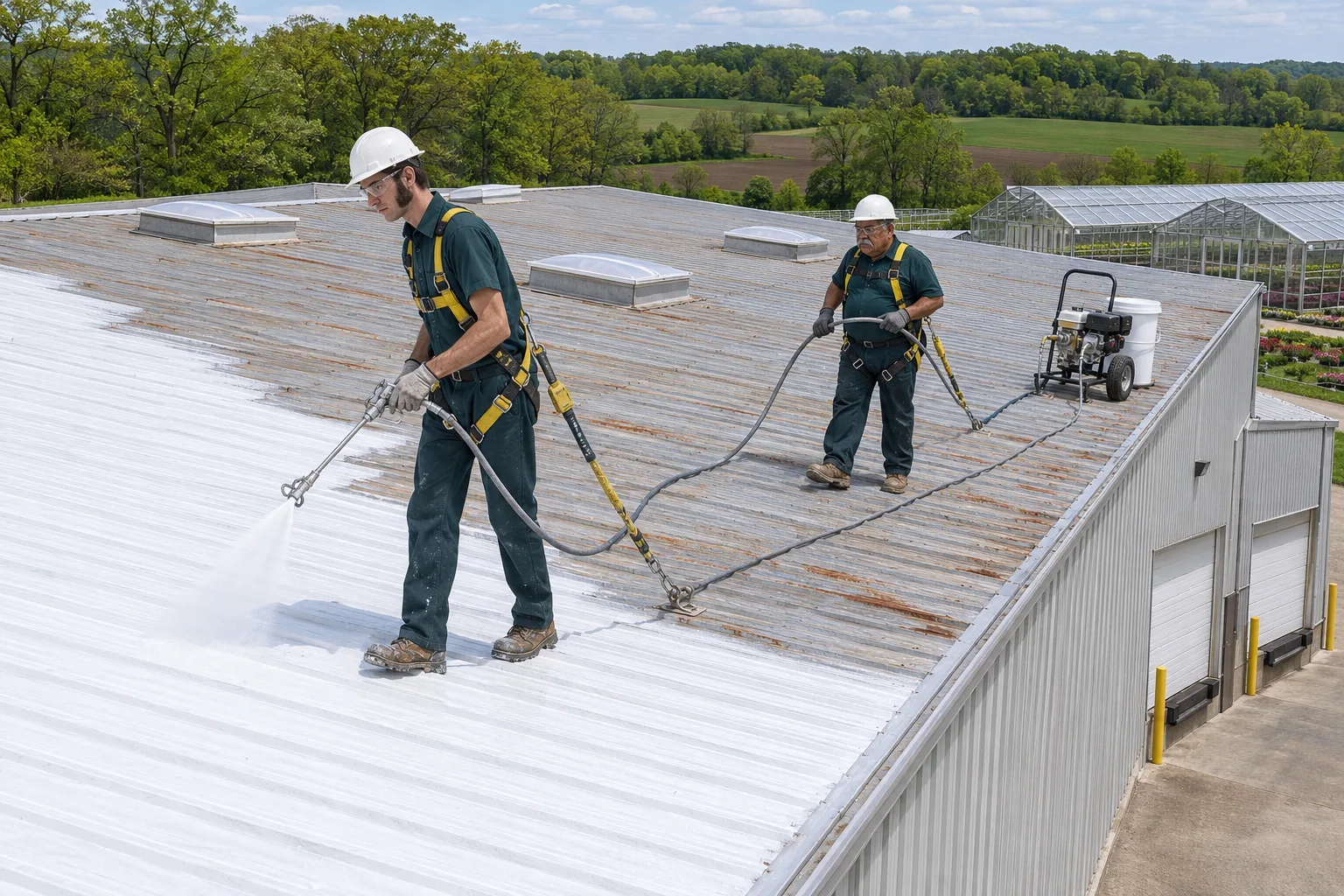
Exposed screws loosen together. We seal them all at once so you stop chasing single drips. One coat then covers every head at once.
Get A Free EstimateFour steps from the first walk to the final coat.
We check every screw line, look for daylight at laps, and note any drips that follow cold mornings. Findings go into a written scope. Ceiling insulation is checked for wet spots.
Loose screws are tightened or upsized, rusted ones are replaced, and each head is sealed. Each head gets sealant before coating. Badly rusted screws are drilled out and replaced.
Panels are washed, rust at eaves and laps is treated, and primer goes on bare steel. Eaves get extra primer where meltwater sits. Panel ends over doors get extra attention.
Laps get fabric, then the field coat goes on across the whole roof to the planned thickness. A final walk checks every screw line. Ridge caps and trim are sealed with the field.
We coat roofs in these towns too. If your building sits elsewhere, call us or send us a message.
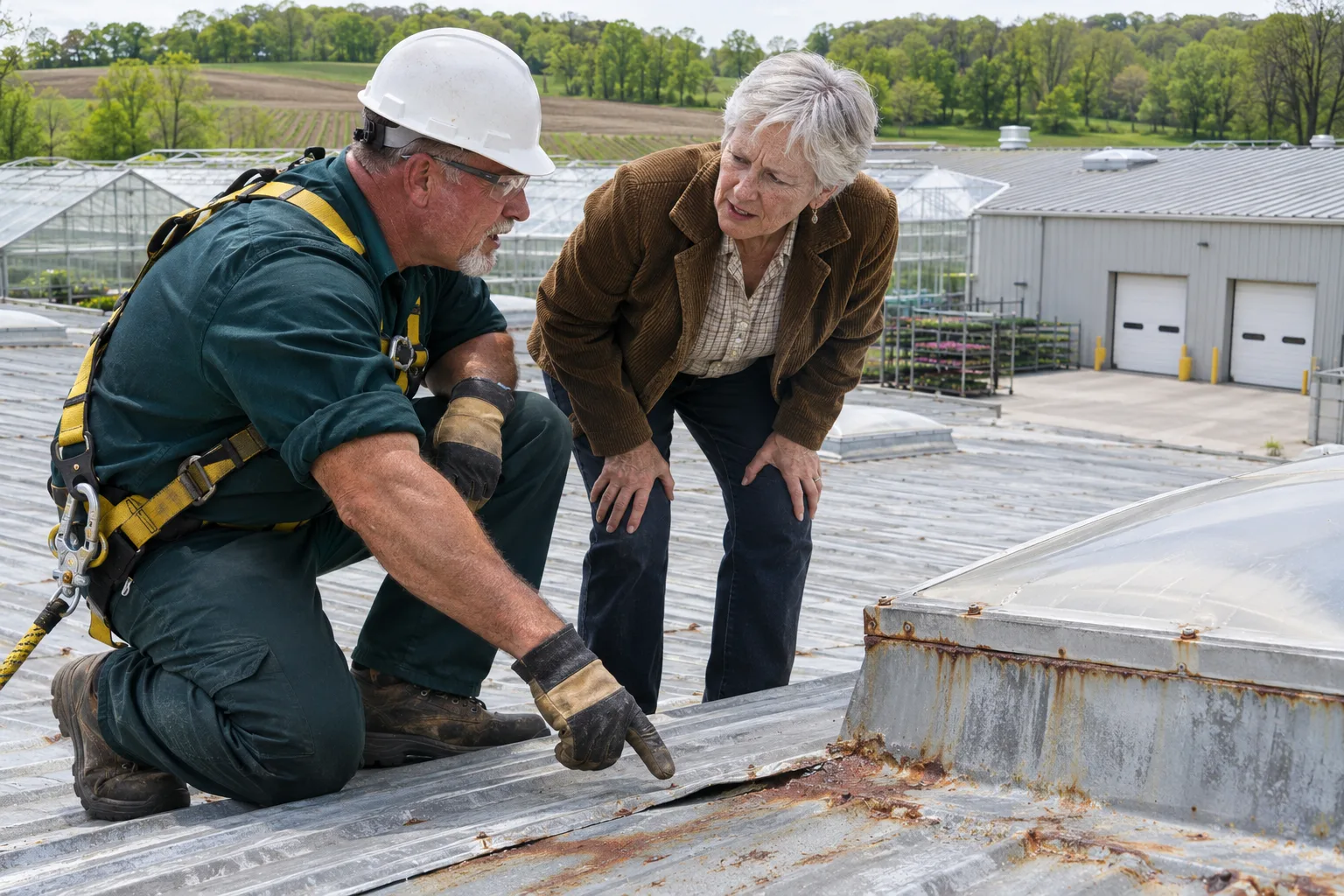
Plant roofs coated around production schedules. Each gets an inspection and a written scope first.
Business roofs with a written scope before work starts. Each gets an inspection and a written scope first.
Owners who spot rust holes and loose screws first. Each gets an inspection and a written scope first.
Shop roofs where gutters and eaves need attention. Each gets an inspection and a written scope first.
What Rushville shop and farm building owners ask us.
Yes. Shops, ag buildings, and commercial roofs in Rushville often have exposed screws and laps that loosen, and coating seals them once they are tightened.
If condensation inside is causing drips, we say so, since an outside coating leaves that alone.
Ask about your roof: (260) 517-5834Yes. Machine sheds and shops in Rushville get the same screw, lap, and rust prep as larger commercial roofs. The written scope covers every screw line.
We cover Rushville from Richmond. Call or send the address, and we set a time to inspect the roof. Distance does not change the published range.
Warm, damp air meets cold steel and condenses under the panels. Ventilation or insulation fixes that; coating handles rain from outside. We note what we see during the inspection.
Yes. Crews stage away from doors and equipment paths and coat in sections. Doors stay usable between sections.
Our published coating range is about $2.50 to $4.00 per square foot. Screw count, lap sealing, rust at the eaves, and access set where a shop roof lands once we inspect it.
Yes. Pole barn roofs get every screw tightened or replaced and every lap sealed before the coat, the same as a commercial shop.
Most take the same metal coating systems as commercial roofs. Buildings with animals or fertilizer storage get a check for corrosive fumes, which can change the primer we choose.
Walk it once a year and after hail or high wind. Look at screw lines, laps, and the eaves, and patch any scuff or puncture with sealant before water gets under the coat.
Send the building size and where it drips. We will check the screws and laps and write up the coating. Shops, sheds, and ag buildings all start the same way.